
Fasting and Faith
Deborah Beach Giordano
A Pointless Exercise?
 Toward the end of our lunch at a local restaurant (as the option of dessert loomed enticingly), Barbara suddenly frowned, “It’s Lent, isn’t it?” I nodded. “I used to be really into that,” she said, “Even checking to see if the children had hidden stashes of candy.” My friend shook her head, “All for what? It didn’t make Alex or Sarah any more religious — actually the opposite. It’s a pointless exercise.”
Just then the waiter arrived and we turned our attention to our menus, the topic of Lenten observance forgotten. At least for the moment.
But driving home, I got to thinking about the whole business of Lent. What purpose does it serve — or does it serve any at all? Is it a pointless exercise?
 Lent wasn’t a big thing in the Methodist church of my childhood. None of us came to school on Ash Wednesday with dark smudges on our foreheads, and giving up chocolate for six weeks was unthinkable; those were odd “Catholic” rituals like the fish sticks served in the cafeteria on Fridays. Although many Protestant children were happy to join in that observance (especially when the alternative was a highly suspect meatloaf. Eww.)
Many years later, my first Ash Wednesday sermon was “A Call to Lenten Fasting.” I was, as Barbara described herself, really into that. So were many of my colleagues. That was then.
That Was Then
After a brief resurgence of interest (connected, I suspect, to the Celtic spirituality fad), Lenten observance has fallen into mundane “whatever” status in most Protestant churches. Participate in an Ash Wednesday service — or don’t (IF one is offered); forego a cherished habit or particular pleasure for the Season — or don’t; enter into a deepened practice of prayer and mindfulness — or don’t. Whatever. It’s no big deal.
But I wonder.
 This seems to be part of a process to streamline our faith; as if making it quicker and easier to be a Christian makes it better, more convenient and comfortable: “pain-free.” But these shortcuts turn our faith into an aside, a peripheral, an app that we occasionally call up, but that isn’t part of our essential operating system.
Rooted in the Reformation belief that rituals distract worshippers from what is important: the Scriptures and the sermon, we can pare things down so completely that … well, to use the onion analogy, if you peel away and peel away, you’ll never reach what you were seeking to reveal. The layers are what make the onion an onion.
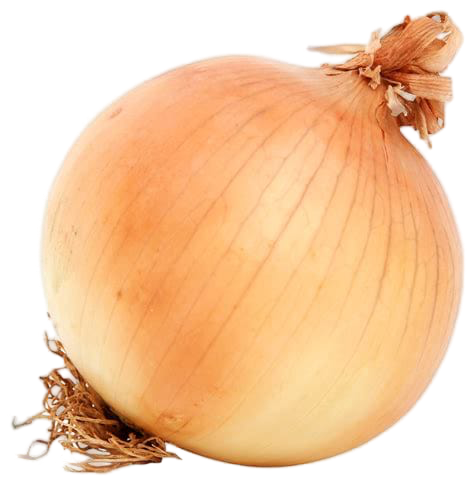
Of course Christianity is not exactly like an onion, but it is layered; there are degrees of involvement. I’m not talking about attending worship services — although that can be part of it, but about how much, how deeply, we are influenced by our faith. Is it embedded in our lives, in every layer: mind, body, spirit; privately, publicly, online and in person?
Empty Spaces
Generally we’re able to go through our days without particular interest in or concern for the Eternal; we may think about God at our evening prayers, perhaps as we start our day, or when we’re stuck behind an annoying customer at the checkout stand (although “Oh, Jesus!” doesn’t really constitute genuine prayer). Otherwise, unless a serious problem arises, our faith is …. well, there’s an expression: “lukewarm,” but that implies that it is present, but untended; that the program is at least running in the background, but a closer analogy might be that it isn’t even installed, it’s still in the downloads folder.
Thus ends my software analogies. 😀
And, though we do not realize why, that lack, that absence from our system makes us lonely, sad, anxious, confused. We know there’s something missing, but we don’t know quite what. So we go rambling and roaming and stumbling along, dissatisfied, irritable; searching for a filler for that emptiness.
Distractions and Distortions
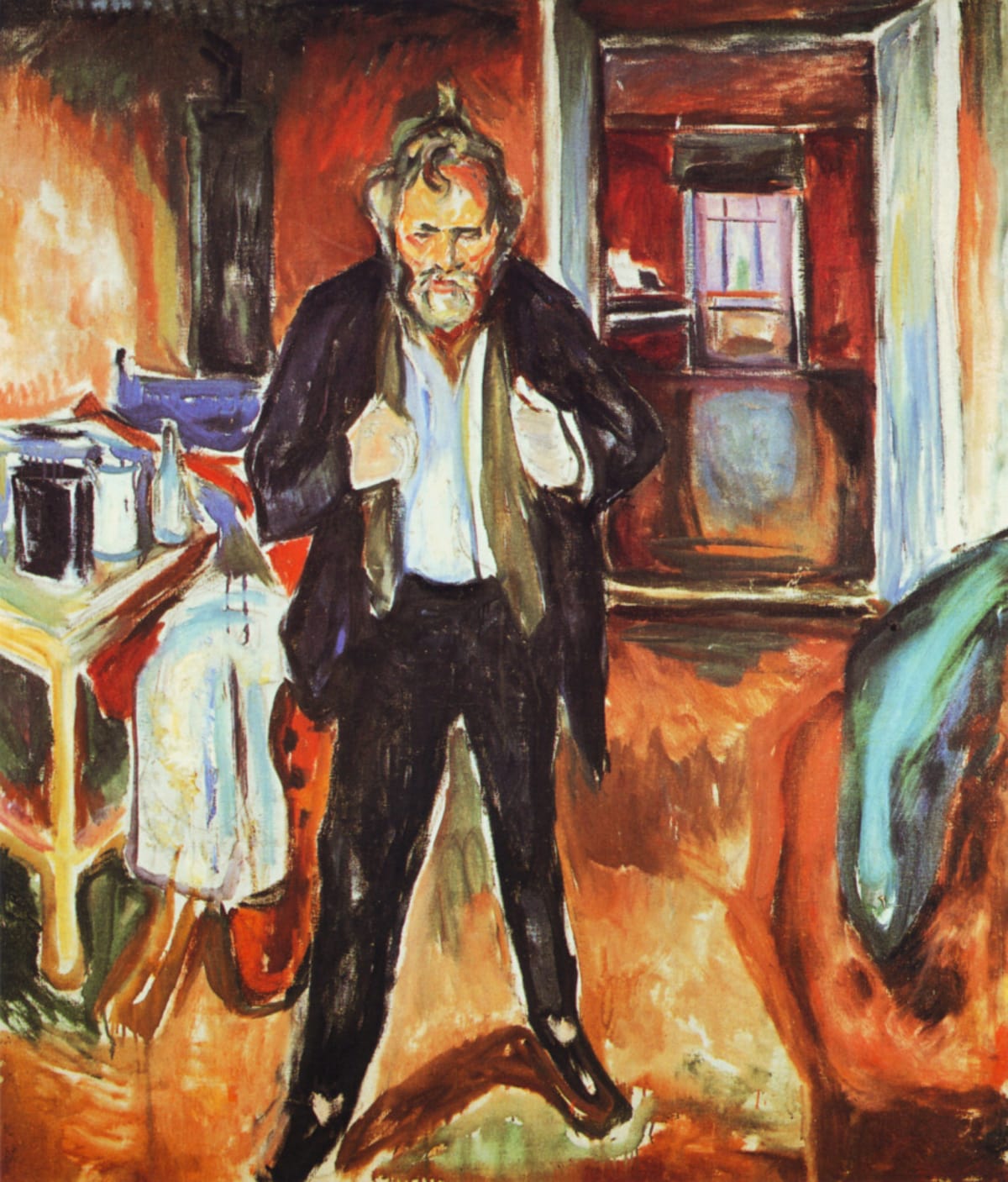
There are always plenty of temporary distractions to serve our purpose: entertainment, amusement, argument; any stimulant to the senses — good or bad, will do. This explains much of partisan politics, that magnificently conflict-ridden, emotionally-charged drama. It also explains binge eating, substance abuse, hoarding, self-harm, obsessive behaviors, addictions, and attention-seeking in its many forms…. whatever can make us feel alive for a few moments.
Sadly, these behaviors become so ingrained that we don’t notice them; they’re habits, “just things we do.” They become a constant background noise in our lives; distracting us and distorting the sounds of life.
Yet all the noise and nonsense of the world cannot silence that still small voice that calls, as deep calls to deep; an unnamable, intangible Something we yearn for.
Clearing the Way
 And here is the purpose and gift of Lenten fasting. It is the shutting down of distractions, quieting the noise and quitting the habits that muddle our thinking and muffle the cries of our hearts. It is a break from routine and a reminder, each time we encounter the item or action, that God is with us — like a bell or a chime ringing out: “Hey! Remember God? Remember Whose you are? Remember what Ultimately matters?”
Our “fast” becomes a “slow” — giving us pause to think, to take a breath, to be free, if only for a moment, from the thousand and one things that press against us, demanding our time and attention. And here, in an instant of awareness, we may hear or see or know the Presence of Holiness in the midst of our busyness, in the midst of our stresses or sadness, in the midst of our trials or temptations, in the midst of our lives.
God is with us. In the midst of everything.
To the Greater Glory of … ?
So why am I talking about this now, when Lent has already begun? Partly because of my conversation with Barbara, but also due to my own practice of fasting. I realized I was more concerned about what I wasn’t doing, than about what the Lord Christ has done. It had become self-referential, not worshipful.
This is the danger of religious works. Actions which ought to be inspired by love and gratitude towards the Lord can be undermined by the persistent ego: the ME that seeks to insert itself and assert itself, claiming credit for what is done. Then our work is no longer for God’s glory but our own.
Restoration Hardware
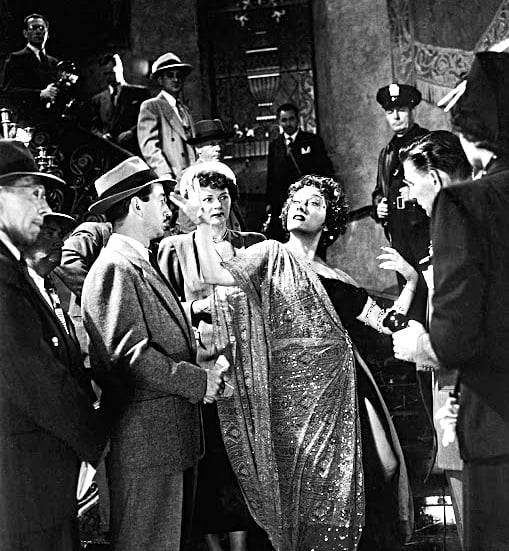 That helps to explain why the Reformers were so hostile to “works of faith.” They understood how easily we can lose the plot — and how readily we turn the spotlight on ourselves. (“I’m ready for my close-up now, Mr. DeMille.”)
Yet the fact that a thing can be misused doesn’t mean it will always be misused, or that it loses its worth due to wrongful use by certain persons. In their zeal the Reformers stumbled on the same temptation as the one they sought to refute: focusing on the actor, rather than the action, overlooking the true purpose and intended effect of many of our sacred rituals.
Making Sacred
The Lenten fast is an “imitation of Christ,” a small sacrifice meant to honor Jesus’ supreme sacrifice for our sakes. Each forsaken sweet or cigarette or soda; each harsh word restrained, web site avoided, temptation resisted is a reminder of what the Lord Christ has done, and what we are called to be: His joyful, courageous, blessed followers.
That’s the miracle of holy fasting, these sacrifices we make in the name of the Lord. And, by the way, “sacrifice” is not a dirty word; we need not fear it or repudiate it. The term comes from the Latin composite of sacer, sacred; and facere, to make. It is to make something sacred, to set it apart from the routine and everyday. Sacrifice is a giving over of something; we might perhaps think of it in terms of “surrender:” what we are letting go of, perhaps handing over to God — to use in accordance with His will, and thus be made holy.
Pain or suffering or death is not to be devised or generated for its own sake — that is madness and utterly counter to the beauty of God’s gracious design, and to Jesus’s teachings. Our Lord came to give life and give it abundantly (John 10:10).
Muscular Christianity
Sacrifice it is not masochism, it isn’t punishment, it isn’t meant to be painful or demeaning; but it is intended to change us. It is an exercise, as we flex our spiritual muscles against temptation. What we resist now — be it ever so humble as a candy bar — builds our ability to resist greater temptations later, temptations that can do us great harm, and may lead to sorrow and regret, and perhaps to terrible evils.
Whoever is faithful in little is faithful also in much; and whoever is unfaithful in a very little is unfaithful also in much.
~ Luke 16:10
Through fasting, we learn what it means to endure; we discover how sly and persistent the voice of temptation, how frail our defenses, how much we stand in need of God’s help; and we learn the power of prayer.
We also grow stronger, and more confident in our ability to deal with temptations, to resist those behaviors that destroy or demean, and refute what is ugly and hate-filled. Developing a greater closeness to God, our hearts and minds become freer and more hopeful, our outlook calm and assured, and more aware of what it means to be a Christian.

Blessed
Fasting/sacrifice is a sort of spiritual training to help us to grow in grace and truth and to develop the divine design that God implanted in us from the beginning. If it had a mantra or slogan, it would be: Think of the Lord Christ and be blessed.
Our fasting/sacrifices are to serve as blessings. Remember that always, write it on the tablet of your heart. Our faith practices are not to shame or debase us or destroy our hope, but to give us understanding, and draw us closer to God; to enhance our relationship, not to set us further apart.
For God did not send the Son into the world to condemn the world, but in order that the world might be saved through him.
~ John 3:17
If not now, when?
Of course fasting is not limited to the Lenten season. We can set aside any period to dedicate to God some of our time and attention, away from the crashing thrashing confusion of daily life, to set ourselves aright, to remember the glory and goodness of the Ultimate reality, to stop and think and be thankful.
Think of the Lord Jesus and be blessed,
Christ’s peace be with you,
Deborah ✝
Suggested Spiritual Exercise
Think of the Lord Jesus and be blessed.
Let not lovingkindness and truth forsake you; bind them around your neck, write them on the tablet of your heart.
~ Proverbs 3:3